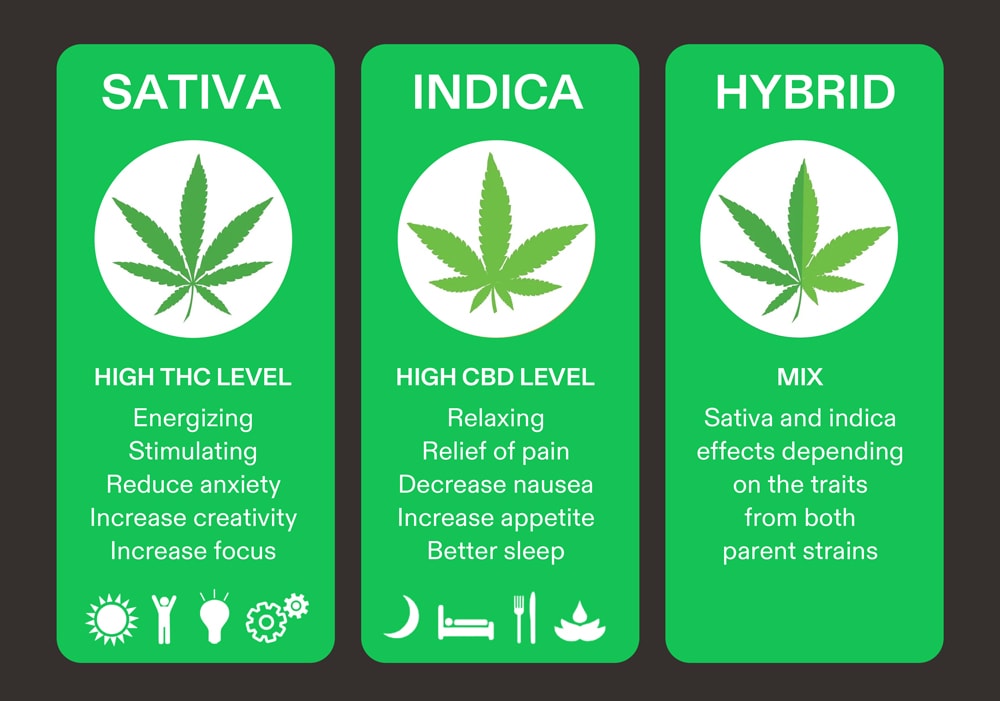
Sativa, Indica, and Hybrid are the three major cannabis varieties, and the main differences come down to plant shape, flowering time, yield, and the growing environment each one needs. Sativa plants grow tall and slender with long flowering times; Indica plants stay short and stocky and finish faster; Hybrid varieties combine traits from both, which is why most modern strains — and most home growers — land in the hybrid category. Understanding these differences before you choose seeds helps you match the plant to your space, your climate, and your schedule.

In this guide, we break down what each variety looks like, how each one grows, and which type fits different growing setups. If you already have a strain in mind, the strain directory at the end links to detailed profiles of popular varieties.
What Are the Three Main Cannabis Varieties?
Cannabis is generally divided into three groups: Cannabis sativa, Cannabis indica, and hybrids of the two. These labels describe growth patterns and plant heritage rather than a strict scientific boundary — thousands of strains on the market today are all bred from these three foundations.
Before growing any cannabis plant, it is important to understand exactly how to care for the variety you choose. Different varieties have different needs for light, temperature, humidity, and vertical space, and meeting those needs is what turns an average harvest into a strong one. For a first-time grower, knowing these differences can save an entire cycle.
Sativa: Tall Plants, Long Flowering Times
Cannabis sativa originally grew in hot, dry, sunny regions including Southeast Asia, West Asia, Central America, and parts of Africa. Sativa-dominant plants are known for the uplifting, energetic, and creative effects users associate with them, along with appetite stimulation and nausea relief.
Sativa plants are easy to recognize in a grow room. They have finger-shaped, slender leaves, and the plants themselves grow tall and thin — outdoors they can stretch beyond 12 feet, which matters a lot when you are planning vertical space indoors.
Key features of Sativa:
- Long flowering time
- Lower yield per plant
- Tall, slender structure with thin leaves
- Needs higher temperature and humidity
- Flower buds are longer, airier, and more sparse
Because of the height and the long flowering period, Sativas reward growers who have tall tents, strong lighting, and patience. If you are working with limited headroom, our guide to hanging grow lights at the right height explains how to manage the light-to-canopy distance as the plant stretches.
Indica: Short Plants, Fast Harvests
Cannabis indica is native to the harsh, dry mountain climates of Pakistan, India, Afghanistan, and Turkey. Indica-dominant varieties are associated with deeply relaxing, calming physical effects, and many users reach for them in the evening for help with sleep.
The plant structure is the opposite of Sativa: short, stocky plants with broader leaves and a shorter growth cycle. That compact shape makes Indica the natural choice for growers with limited planting space — a small tent or a discreet cabinet is enough to grow one out.
Key features of Indica:
- Short flowering time
- High yield relative to plant size
- Short, strong plants with broad leaves
- Tight, dense flower buds
Hybrid: The Best of Both Worlds
Hybrid varieties are bred by crossing Sativa and Indica lines to combine the desirable traits of both. Most modern strains are hybrids, and they are the first choice of most growers because breeders can tailor plant size, flowering time, yield, and effect profile toward a specific goal.
Main features of Hybrid:
- Combines characteristics of Sativa and Indica
- High flower bud yield
- Short flowering time
- Better growth adaptability and stronger disease resistance
Hybrids range from balanced 50/50 crosses to strongly sativa-dominant or indica-dominant profiles, so it is worth checking each strain's background before you buy seeds.
Sativa vs. Indica vs. Hybrid: Side-by-Side Comparison
| Feature | Sativa | Indica | Hybrid |
|---|---|---|---|
| Plant height | Tall, can exceed 12 ft outdoors | Short and stocky | Varies by lineage |
| Leaves | Thin, finger-shaped | Broad | Mixed |
| Flowering time | Long | Short | Usually short |
| Yield per plant | Lower | High | High |
| Buds | Long, airy, sparse | Tight, dense | Varies |
| Climate needs | Higher temperature and humidity | Tolerates harsher, drier conditions | Adaptable |
| Typical effect profile | Uplifting, energetic | Relaxing, calming | Blended |
Which Variety Should You Grow?
Match the variety to your setup rather than chasing a trend:
- Limited space? Choose an Indica or an indica-dominant hybrid. Compact plants fit small tents and grow boxes.
- Tall tent and patience? A Sativa rewards you with a long vegetative stretch, but plan your lighting and ventilation around it. Our guides to controlling grow tent temperature and raising humidity in a grow tent cover the environment Sativas demand.
- First grow? Start with a forgiving hybrid. Strong disease resistance and a short flowering time make hybrids the safest way to learn the full cycle from seed to harvest.
- Growing from autoflower seeds? Variety still matters for shape and size. Our guide to autoflowering seeds explains how genetics and life cycle interact.
Popular Strains by Variety
There are thousands of cannabis strains on the market, and each one grows a little differently. The profiles below cover popular strains grouped by their dominant variety — each guide walks through the strain's background, growth characteristics, flowering time, and what growers can expect.
Sativa-dominant strains
Indica-leaning hybrids
- Gumbo Strain
- Mochi Strain
- Papaya Strain
- Cotton Candy Strain
- Biscotti Strain
- Bubble Gum Strain
- Dulce De Uva Strain
Balanced and versatile hybrids
- Apples and Bananas Strain
- Apple Fritter Strain
- Jealousy Strain
- Gorilla Glue #4 Strain
- Permanent Marker Strain
- Bananaconda Strain
Master the basic characteristics of the three varieties first, and every strain profile becomes much easier to read. When you are ready to plant, you can build your own grow kit and start your own growing journey.
How Variety Shapes Your Grow Room Setup
The variety you pick changes more than the plant's looks — it changes the equipment and the routine around it.
Space and structure: Sativas need vertical headroom and regular training to keep the canopy flat; Indicas hold a compact shape with little intervention; hybrids usually sit in between, which is why they fit the widest range of tents.
Climate control: Sativas come from hot, humid regions, so they expect higher temperature and humidity targets and can suffer in dry rooms. Indicas handle cooler, drier ranges better. Whatever you grow, a thermometer–hygrometer pair at canopy level takes the guesswork out — the temperature and humidity guide walks through the target ranges by growth stage.
Timing and planning: Long-flowering Sativas tie up your tent for months, so stagger variety choices if you want a continuous harvest. Fast hybrids let you run more cycles per year in the same space.
None of these differences make one variety objectively better. They make one variety objectively better for your room, your schedule, and your goals — which is exactly why the variety question comes before the strain question.
Frequently Asked Questions About Sativa, Indica, and Hybrid
Which is stronger: Sativa or Indica?
Neither is inherently stronger. Potency depends on THC content, which varies by strain, not by variety. A well-grown hybrid can be far more potent than a poorly grown Sativa.
Do Sativa plants really take longer to flower?
Yes. Sativas typically flower for 10–14 weeks or longer, while many Indicas and hybrids finish in 8–10 weeks. That extra time is one of the main reasons indoor growers lean toward indica-dominant hybrids.
Can you grow Sativa indoors?
You can, but plan for height. Sativas stretch considerably, so you will need vertical clearance, training techniques to manage the canopy, and attention to temperature and humidity.
What percentage of modern strains are hybrids?
The vast majority of strains sold today are hybrids. Pure Sativa and pure Indica landrace genetics are rare in commercial seed banks, and most breeders work exclusively with hybrid lines.
Does variety determine the effect?
Variety is a starting point, not a guarantee. The full cannabinoid and terpene profile of a specific strain matters more than the Sativa or Indica label, so read individual strain profiles before deciding.

